Making Tax Digital: what freelancers actually need to do
Key takeaways
- Making Tax Digital for Income Tax starts 6 April 2026 for self-employed people
- You must keep digital records and submit quarterly updates to HMRC
- First quarterly deadline: 7 August 2026. Second: 7 November 2026
- You'll need MTD-compatible software, spreadsheets alone won't be accepted
MTD is coming whether you like it or not
Making Tax Digital for Income Tax (MTD ITSA) kicks in on 6 April 2026. If you're self-employed and your income is above the threshold, this affects you. No more doing everything once a year in January. HMRC wants updates every quarter now.
It sounds like more work. In practice, it's mostly about changing how you keep records, from shoeboxes and spreadsheets to proper software. Here's what you need to know.
Who does MTD apply to?
MTD for Income Tax applies to self-employed individuals and landlords with annual gross income above the qualifying threshold. HMRC has been phasing this in, starting with higher earners.
If you're freelancing and earning a reasonable income, you'll likely be in scope. Check the current threshold on the gov.uk website, it's been changing as the rollout progresses.
What do you need to do differently?
Three things change:
1. Digital record-keeping
You must keep digital records of your income and expenses using MTD-compatible software. This means:
- Every invoice you send must be recorded digitally
- Every business expense must be logged
- Records must include dates, amounts, and categories
You can't just use a spreadsheet on its own. The software needs to be able to communicate with HMRC's systems via their API. Most accounting software (FreeAgent, Xero, QuickBooks) already supports this.
2. Quarterly updates
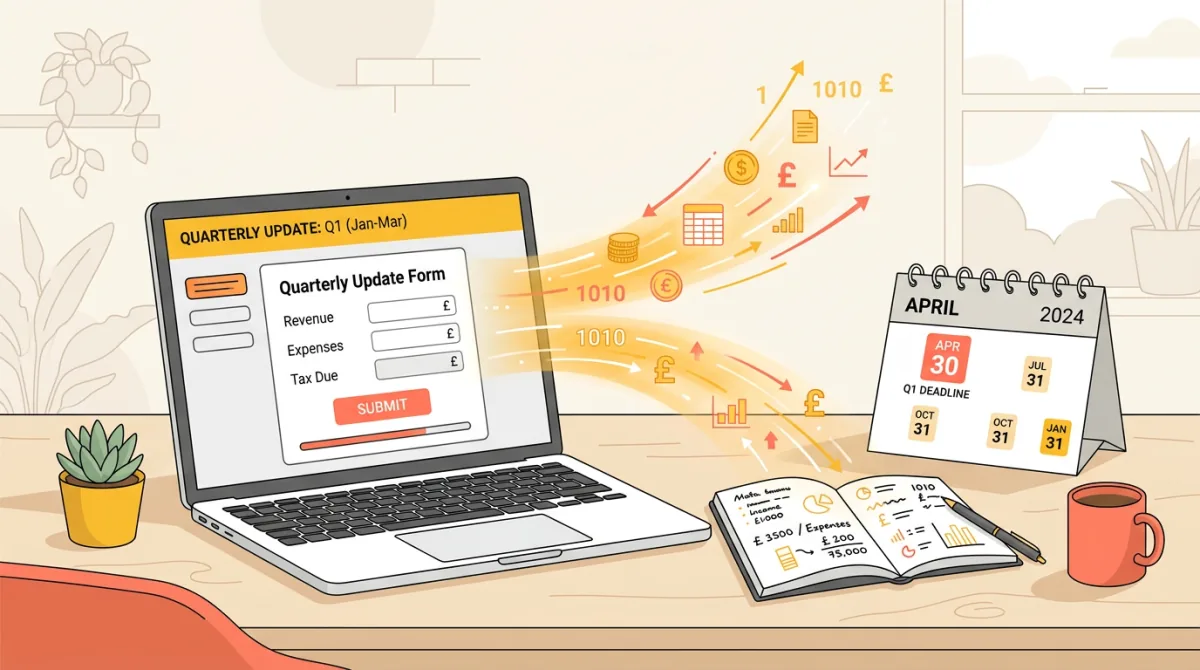
Instead of one annual tax return, you'll submit quarterly updates to HMRC. These are summaries of your income and expenses for each quarter. The deadlines for the 2026/27 tax year are:
- Quarter 1 (6 April - 5 July 2026): Due 7 August 2026
- Quarter 2 (6 July - 5 October 2026): Due 7 November 2026
- Quarter 3 (6 October 2026 - 5 January 2027): Due 7 February 2027
- Quarter 4 (6 January - 5 April 2027): Due 7 May 2027
After all four quarters, you'll also submit a final declaration (similar to the current Self Assessment return) by 31 January 2028.
3. End of period statement
At the end of the tax year, you'll confirm your final figures and make any adjustments (like capital allowances). This replaces part of the traditional Self Assessment process.
Your invoicing records, already digital
If you're using HelloNoa to send invoices, your income records are already being tracked digitally. One less thing to worry about when MTD arrives.
Keep your records sortedWhat software do you need?
Your software must be MTD-compatible: meaning it can submit data to HMRC via their API. Popular options include:
- FreeAgent: popular with UK freelancers, straightforward interface
- Xero: more features, slightly steeper learning curve
- QuickBooks Self-Employed: simple, affordable option
- HMRC's own software: free, basic, does the job
HMRC maintains a list of compatible software on their website. Check before you commit to anything.
What happens if you miss a deadline?
HMRC is introducing a new points-based penalty system for MTD. For each quarterly update you miss, you get a penalty point. Once you accumulate a certain number of points, you get a £200 fine. Points expire after a period of compliance.
For late payment, interest is charged from the date payment was due. The rate is the Bank of England base rate + 2.5%.
The intention is to be less punitive for one-off mistakes but stricter for repeated lateness. Still, it's worth staying on top of deadlines from the start.
How to prepare (before April 2026)
- Choose your MTD-compatible software now: don't wait until April. Give yourself time to learn it.
- Start keeping digital records today: even if you're not yet required to. It's good practice.
- Set calendar reminders for the quarterly deadlines. August 7 is your first one.
- Talk to your accountant: if you have one, they'll need to adapt their process too.
- Don't panic: MTD is really just formalising what good record-keeping looks like. If you're already tracking income and expenses digitally, you're halfway there.
The silver lining
Quarterly reporting sounds like more hassle, but it has an upside: you'll have a much clearer picture of your finances throughout the year. No more January shock when you realise what you owe. You'll know your tax position every three months.
For freelancers who've been winging it with annual returns, MTD might actually be the push towards better financial habits. And that's not a bad thing.
Related articles
Making Tax Digital: what UK freelancers need to know (2026)
HMRC's Making Tax Digital starts April 2026 for freelancers over £50,000. Here's what it means, what you need, and how to prepare.
Self assessment: the no-panic guide for freelancers
Self assessment doesn't have to be stressful. Here's what you owe, when it's due, and how to avoid penalties, explained like a human, not HMRC.